
Condensation & Black Mould on Windows in Winter: Causes and Fixes

Wet windows every morning? Here's why
It's a classic Berlin winter scene. You wake up, the windows are dripping, there's a puddle on the sill, and the corners of the frame are slowly turning black.
Condensation on windows is one of the most common winter problems in rented flats. It happens with modern double glazing too, but it's worst in Altbau flats with old box windows (Kastenfenster) and single glazing, where the glass gets very cold.
Left alone, that daily moisture turns into black mould on frames, sills and window reveals. It damages the wood, can affect your health, and is a common reason for deposit deductions at move-out.
The good news: a few daily habits stop most condensation, and surface mould on frames can usually be cleaned before it spreads. If you haven't yet, also read our winter mould guide for the bigger picture.
This post covers why windows get wet, how to stop it, how to clean black mould safely, and when to call a professional.
What causes condensation on windows in winter?
Condensation happens when warm, humid room air touches a cold surface. Windows are the coldest surfaces in any flat, so moisture lands there first. With modern double glazing you'll mostly see it at the edges and bottom of the glass; with old Altbau windows, often across the whole pane.
Altbau box windows (Kastenfenster): how they work
A Kastenfenster is two single-glazed windows with an air gap between them. The outer window keeps out wind and rain; the inner one keeps in heat. Ideally, the gap stays cold and dry.
Where it goes wrong
Leaky inner seals. Over the years, the inner window stops closing tightly. Warm, moist room air slips into the gap and condenses on the cold outer pane.
Single glazing. Each pane is thin, so the glass gets almost as cold as the outside air.
Water sits in corners and on sills. Condensation runs down the glass and pools in the frame corners and on the wooden sill, often for hours.
Old paint layers. Cracked or peeling paint lets water soak into the wood, where mould grows from the inside.
Too much humidity in the flat. Showering, cooking, drying laundry and sleeping in a closed room all add moisture. If humidity stays above about 60%, windows will keep running wet.
Typical sign: fogged or wet glass on the outer pane means moist air is leaking through the inner window. Wet glass on the inner pane means humidity in the room is too high.
How to stop condensation on windows: a daily routine
Wipe every morning. Use a squeegee or microfibre cloth on the glass, then dry the corners and sill. Two minutes a day prevents most black spots.
Air fully, not tilted. Open both the inner and outer window wide for 5–10 minutes, 2–3 times a day, then close them tightly.
Keep the inner window closed the rest of the time. Leaving it open lets warm, moist air reach the cold outer pane.
Don't block the heat. Thick curtains, blinds or furniture in front of the window keep the glass extra cold. Leave a gap so warm air can reach it.
Keep bedroom humidity down. Bedrooms produce a lot of moisture overnight. Air straight after waking up and keep the room at least 16–17 °C.
Clear the sill. Plants, books and decorations on the sill trap water and hide mould.
Check the seals. If the inner window doesn't close tightly, tell your landlord or Hausverwaltung in writing. Resealing is usually the building owner's job.
A cheap hygrometer (about €10) helps: aim for 40–60% humidity indoors.
How to remove black mould from window frames and sills
Small surface spots on painted frames, glass edges and sills can usually be cleaned yourself:
Protect yourself. Wear gloves and a simple mask, and open the window.
Dry the area first. Mould cleaning works better on a dry surface.
Wipe with 70% alcohol. Isopropanol or Brennspiritus on a cloth. Don't spray it directly into the frame joints.
Use a soft brush for corners. An old toothbrush dipped in alcohol works well for frame corners and the glass edge.
Dry thoroughly. Leave the window open for a few minutes so the wood dries.
Throw away the cloth. Don't reuse it elsewhere.
Avoid:
Bleach and chlorine sprays. They can discolour the paint and don't reliably kill mould in porous wood.
Lots of water. Soaking the wood makes the problem worse.
Scraping or sanding. It spreads spores and damages old paint, which may also contain lead in very old buildings.
If the spots come back within a week or two, the moisture problem hasn't been solved, or the mould is deeper in the wood.
When to call a professional
Call in help when:
Black spots cover several frames or keep returning after cleaning
Mould has spread from the frame onto the wall or window reveal (Laibung)
You can't safely reach between the two windows or the outer panes
You're moving out and the windows need to be handover-ready
The wood is soft, swollen or rotting. That's a repair job for the landlord or a carpenter, not a cleaning job.
Window cleaning and mould treatment in Berlin
We clean Kastenfenster and old Altbau windows across Berlin every week, including the hard-to-reach glass between the two windows.
Service | Price |
Kastenfenster cleaning (Altbau), inside and out, frames and sills | €12 per pane |
Standard window cleaning (Neubau) | €6 per pane |
Mould treatment on frames, reveals and nearby walls | from €149 |
Window cleaning and mould treatment can be combined with a deep, move-in or move-out cleaning, all in one visit. You get before-and-after photos, and our English-speaking team is fully insured (€5M liability).
Send us photos of your windows on WhatsApp for a fixed price, usually within a few hours.
FAQ
How do I stop condensation on my windows in winter?
Air your rooms fully for 5–10 minutes 2–3 times a day instead of tilting windows, wipe the glass and sills every morning, keep rooms heated to at least 16–17 °C, and keep indoor humidity between 40 and 60%.
Why are my windows wet inside every morning?
Overnight, breathing and warm room air raise humidity. When that moist air touches the cold window glass, it condenses into water. It's most common in bedrooms and in old single-glazed or box windows.
Can black mould on wooden window frames be removed?
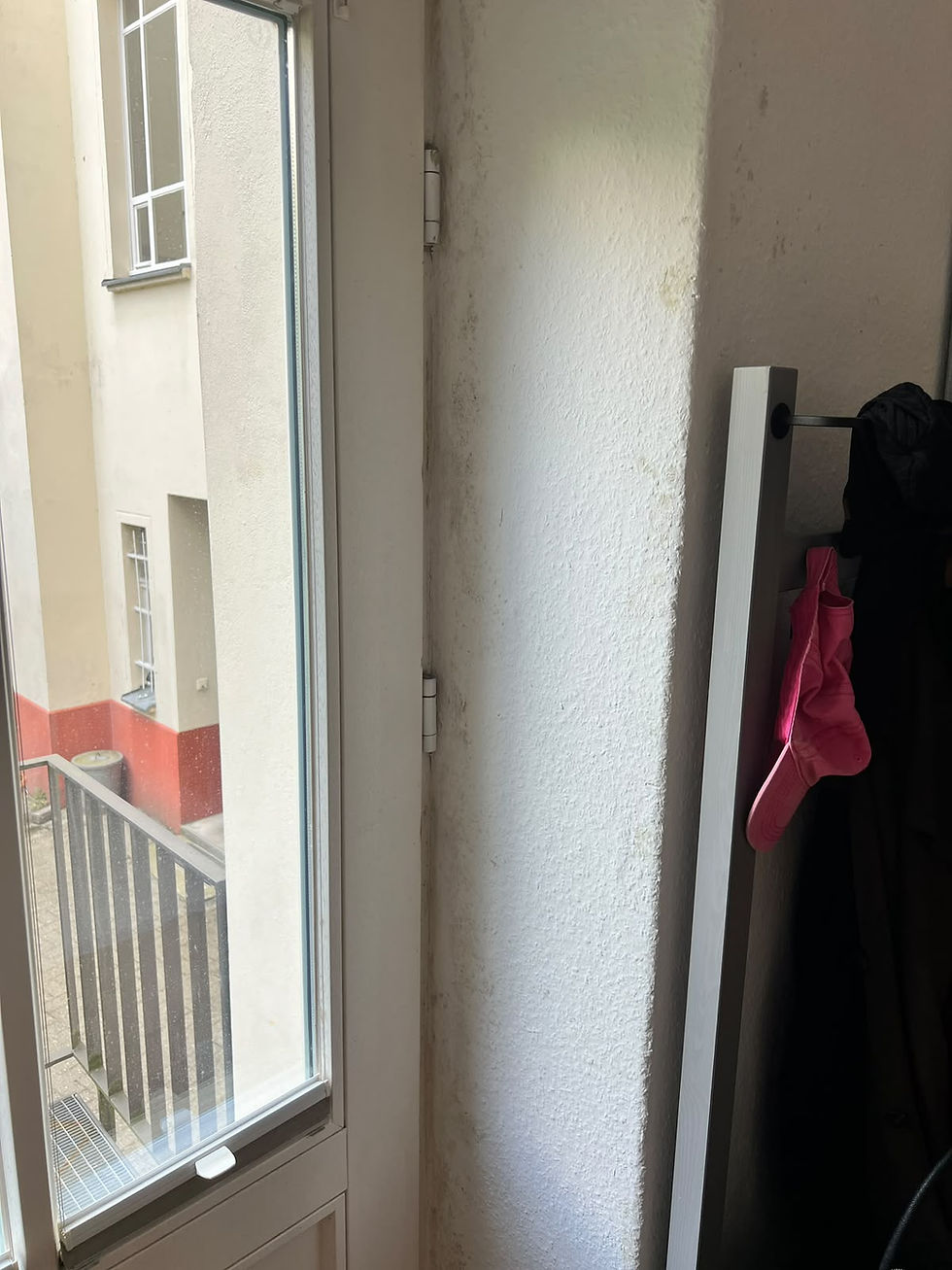
Surface spots can usually be removed with 70% alcohol and careful cleaning. If the wood is soft, swollen or deeply stained, the frame may need repair by a carpenter or the landlord.
Why do Kastenfenster (box windows) get wet between the panes?
Leaky inner seals let warm, moist room air into the gap between the two windows, where it condenses on the cold outer pane. Resealing the inner window is usually the landlord's job.
How much does window and mould cleaning cost in Berlin?
At BerlinCleaner, Altbau box window cleaning costs €12 per pane and standard windows €6 per pane. Mould treatment on frames starts at €149.

Comments